편집자 주 = 영상이 문자를 압도하는 시대를 맞았습니다.Editor's note = The video has reached an era where text overwhelms. 연합뉴스는 OTT(온라인동영상 서비스) 시대에 발맞춰 전북지역 현안과 사건·사고를 톺아보고 이를 영화, 문헌과 접목해 인문학적 고찰을 시도하는 기사를 2주에 한 번씩 10차례에 걸쳐 소개합니다.Yonhap News Agency introduces 10 articles every two weeks that look at pending issues and incidents and accidents in Jeollabuk-do and combine them with movies and literature to conduct humanities reviews in line with the OTT era. 이 기사에는 스포일러가 포함돼 있습니다.This article contains a spoiler.
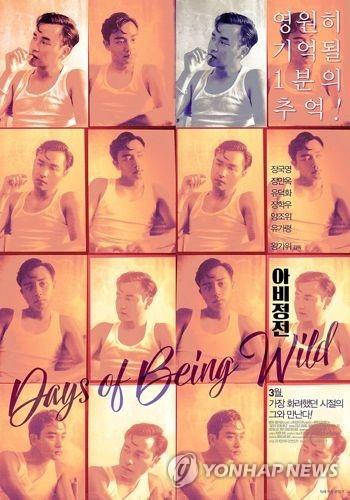
영화 '아비정전'The movie, "Days of Being Wild".
[엔케이 컨텐츠 제공][N.K contents provided]
(전주=연합뉴스) 김동철 기자 = 4월 1일 만우절이 다가올 즈음 생각나는 사람이 있다.Reporter Kim Dong-cheol (Jeonju = Yonhap News) = I remember someone around April 1st.
"세상에 발 없는 새가 있다더군."There is a bird in the world that has no feet. 늘 날아다니다 지치면 바람 속에서 쉰대.They say that if you're tired from flying all the time, you'll rest in the wind. 평생 딱 한 번 땅에 내려앉는데 그건 바로 죽을 때지."Once in a lifetime, I'll be on the ground, and that's when I'll die."
왕가위(왕자웨이) 감독의 영화 '아비정전(阿飛正傳)'의 대사처럼 발 없는 새가 되어 떠난 스타.Like the line from Wang Jawaii's movie "Abi Jeongjeon," he left as a footless bird.
홍콩 배우이자 가수 장국영(장궈룽·1956∼2003)이 세상을 등진 지 올해로 20년이 됐다.It has been 20 years since Hong Kong actor and singer Jang Kook-young (1956-2003) turned his back on the world.
장국영은 2003년 4월 1일 홍콩 만다린오리엔탈 호텔 24층에서 투신해 숨을 거뒀다.On April 1, 2003, Jang Kook-young jumped from the 24th floor of the Mandarin Oriental Hotel in Hong Kong and died. 사인은 우울증으로 인한 극단적 선택으로 결론 났지만, 그 원인은 정확히 밝혀지지 않았다.The cause of death was concluded to be an extreme choice due to depression, but the cause was not accurately identified.
장국영의 죽음 이후로 대중은 영화 '아비정전'을 많이 떠올렸다.Since Jang Kook-young's death, the public has recalled a lot of the movie, "Abigail Jung-jeon." 쓸쓸했던 그의 인생과 맞닿은 지점이 많기 때문이다.This is because there are many points that touch his lonely life.
아비정전은 깊은 사랑을 경계하는 바람둥이 아비(장국영)와 수리진(장만옥), 루루(유가령) 등 두 여자의 엇갈린 사랑을 그린 작품이다.Abijeongjeon is a work that depicts the mixed love between two women, Jang Guk-young, a playboy who is wary of deep love, Suri-jin (Jang Man-ok), and Lulu (Yoo Ryeong).
왕가위 감독의 초기작으로, 왕가위 특유의 섬세한 미장센과 뛰어난 영상미가 돋보인다.It is an early film directed by Wang Gawi, and Wang Gawi's unique delicate mise-en-scene and outstanding visual beauty stand out.
장국영이 러닝셔츠만 입고 맘보춤을 추는 장면은 지금도 회자하는 명장면으로 남아 있다.Jang Kook-young's mambo dance wearing only a running shirt remains a famous scene.
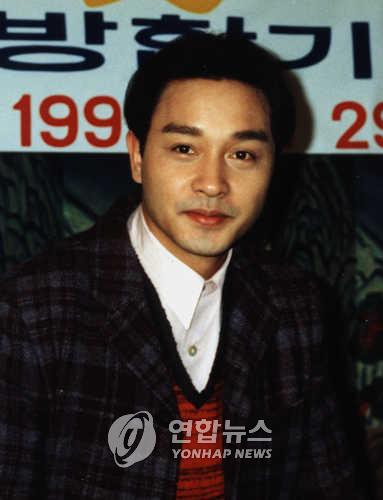
장국영Jang Kook-young.
[연합뉴스 자료사진][Yonhap News material photo]
1960년 홍콩, 친어머니에게 버림받고 양어머니 품에서 성장한 아비는 진실한 사랑을 믿지 않는다.In 1960, a father who grew up in the arms of his adoptive mother abandoned by his biological mother does not believe in true love. 바람둥이인 그는 매일 오후 3시가 되면 축구장 매표소에서 일하는 수리진을 찾아간다.As a playboy, he visits the repair shop at 3 p.m. every day.
아비는 그녀에게 이 순간을 영원처럼 기억하게 될 거란 말을 남기며 수리진의 마음을 뒤흔든다.The father shakes the hearts of the repair crew, leaving a message to her that she will remember this moment as if it were forever.
"4월 16일 오후 3시, 당신은 나와 함께 했어."At 3 p.m. on April 16th, you were with me. 당신 덕분에 난 그 1분을 기억할 거야.Thanks to you, I will remember the minute. 너와 나는 1분을 같이 했어, 나는 이 1분을 지울 수도 없어.You and I spent a minute together, and I can't erase this minute. 그건 이미 과거가 되어버렸으니까." for it has become the past."
'중2병'에 걸린 것 같은 대사지만, 이 장면으로 장국영은 영원히 기억된다.It is a line that seems to have a "second-grader disease," but Jang Kook-young is forever remembered for this scene.
수리진은 홀린 듯 아비를 사랑하게 되고 결혼하길 원하지만, 구속을 싫어하는 아비는 그녀와 거리를 둔다.Surijin falls in love with her father and wants to marry her, but her father, who hates arrest, keeps a distance from her.
수리진은 결혼을 거절한 아비를 떠난다.Surijin leaves her father, who refused to marry her. 아비는 댄서인 루루와 또 다른 사랑을 이어가지만, 이들의 관계 역시 오래가지 못한다.Abi continues another love with dancer Lulu, but their relationship also does not last long. 아비는 생계를 책임지겠다며 깊은 관계를 요구한 루루에게 이별을 통보한다.The father tells Lulu, who asked for a deep relationship, that he will take responsibility for his livelihood, that he will break up with her. 결국 아비는 친어머니를 찾아 필리핀으로 떠났으나 친모는 만남을 극구 피한다.Eventually, the father left for the Philippines to find his biological mother, but the biological mother avoids meeting her.
아비가 집을 나설 무렵 뒤에서 바라보는 친모의 시선을 느낀다.I feel my biological mother's gaze from behind as my father leaves the house.
아비는 "단 한 번이라도 어머니의 얼굴을 보고 싶었는데 그것도 싫으시다면 나도 보여주지 않을 거다"면서 두 주먹을 불끈 쥐고 걸어간다.Dad walks with his fists clenched, saying, "I wanted to see my mother's face even once, but if you don't like it, I won't show you either." 영화 내내 나른했던 아비의 가장 씩씩한 모습이다.This is the bravest scene of Dad, who was drowsy throughout the movie.
아비는 위조 여권을 구해 필리핀을 떠나려다 폭력 사건에 휘말리게 되고 결국 기차에서 괴한이 쏜 총에 맞아 숨을 거둔다.While trying to get a fake passport and leave the Philippines, Abi is caught in a violent incident and eventually dies after being shot by a gunman on a train.
아비정전은 상실과 사랑을 갈망하는 이야기다.Abi Jeongjeon is a story of longing for loss and love. 영화는 겨우겨우 숨 쉬는 아비에 대한 깊은 연민으로 가득하다.The movie is filled with deep sympathy for the barely breathing father.
그가 사랑을 믿지 않는 것은 친어머니에게 버림받고, 양어머니에게 버림받을 뻔하는 등 당연히 사랑받아야 할 가족들에게서 배신당한 상처 때문이다.The reason why he does not believe in love is because of the wounds of being betrayed by his family, such as being abandoned by his biological mother and almost being abandoned by his adoptive mother. 공감받지 못한 인생이었다.It was a life that I didn't sympathize with.
1990년에 개봉한 이 영화는 1997년 중국 반환을 앞둔 홍콩인들의 불안한 정서를 반영했다는 평가를 받았다.The film, which was released in 1990, was evaluated as reflecting the uneasy emotions of Hong Kong people who are about to return to China in 1997.
국내에선 홍콩 누아르를 기대했던 관객들이 극장 유리창을 깨고 환불 소동을 벌이는 등 여러모로 '전설'로 남은 작품이다.In Korea, it remains a "legend" in many ways, with audiences expecting Hong Kong Noir breaking the theater window and causing a refund fuss.
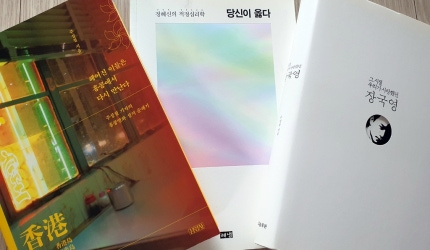
장국영과 참고 영화·심리 서적Chiang Kai-shek and his reference movies and psychological books
[촬영 : 김동철][Filmed by Kim Dongchul]
친모에 대한 트라우마와 콤플렉스에서 온 오랜 결핍은 아비의 죽음으로까지 이어졌다.Trauma of her biological mother and a long absence from her complex led to her father's death.
아비처럼 자신을 끝없이 소모하는 자기 모멸은 우울증과 같은 심리 장애를 낳기 마련이다.Self-denial, which consumes oneself endlessly like a father, is bound to lead to psychological disorders such as depression.
지독한 나르시시스트인 아비는 주변인과 공감하는 데 서툴렀고 진실한 소통도 거부한다.Dad, a terrible narcissist, was not good at empathizing with people around him and refused to communicate with them.
정신과 전문의인 정혜신 박사는 저서 '당신이 옳다'에서 "사람의 생존에 결정적인 영향을 미치는 것은 무조건 나를 공감해주는 단 한 사람의 존재이며, 공감은 죽어가는 사람을 살리는 '심리적 심폐소생술'과 같다"고 말한다.Dr. Jeong Hye-shin, a psychiatrist, says in his book You Are Right, "What has a decisive impact on a person's survival is the only one who unconditionally sympathizes with me, and empathy is like psychological cardiopulmonary resuscitation that saves a dying person."
그러나 고통과 상처, 갈등을 이야기할 때는 '충조평판(충고·조언·평가·판단)'을 하지 말라고 주문한다.However, when talking about pain, injury, and conflict, they are asked not to give "reasoning reputation (advice, advice, evaluation, judgment.
정 박사는 고개를 끄덕이며 무조건 긍정하는 것, 상대를 위한답시고 하는 '충조평판'은 공감이 아니라고 단언한다.Dr. Jeong nods and affirms that "Chung Jo-pyeong," which unconditionally affirms and tries for the other person, is not empathy.
상대가 힘에 부치는 순간에 정작 필요한 건 '네가 그랬다면 뭔가 이유가 있었을 것이다', '너는 옳다'는 이야기라고 저자는 말한다.The author says that what is really needed at a moment when the other person is out of control is, "If you did, there would have been a reason," and "You are right."
'공감과 소통'이 유행어처럼 되어버린 시대지만 역설적으로 공감과 소통이란 단어가 진부해진 요즘 곱씹어볼 만한 대목이다.Although "sympathy and communication" has become like a buzzword, paradoxically, it is worth recalling these days when the words empathy and communication have become obsolete.
맞장구쳐주고 함께 눈물을 흘리고 화내줄 수 있는 '편파적인 내 편' 한 명만 있어도 성공한 인생일 것이다.It would be a successful life if there was only one "biased side" who could respond, shed tears, and angry together.
우리네 인생에서 보통 어머니가 '편파적인 내 편'이지만 아비 곁에는 내 편이 없었다.In our lives, our mother is usually a "biased side of me," but there was no side of my father.
"마음이 피곤해 더 이상 세상을 사랑할 수 없다"란 말을 남기고 홀연히 떠난 아비 장국영이 그리워지는 봄이다.It is spring when I miss my father, Jang Kook-young, who suddenly left after saying, "I can't love the world anymore because my heart is tired."
※ 참고 문헌 : 정혜신 '당신이 옳다', 이명수 '내 마음이 지옥일 때', 스티븐 테오 '왕가위의 시간', 주성철 '그 시절 우리가 사랑했던 장국영'참고Reference: Jeong Hye-shin "You're Right," Lee Myung-soo "When My Heart Is Hell," Stephen Theo "Time for Wang Scissors," and Joo Sung-chul "Jang Kook-young, We Loved At That Time."
영화 '아비정전'The movie, "Days of Being Wild".
[엔케이 컨텐츠 제공][N.K contents provided]
(전주=연합뉴스) 김동철 기자 = 4월 1일 만우절이 다가올 즈음 생각나는 사람이 있다.Reporter Kim Dong-cheol (Jeonju = Yonhap News) = I remember someone around April 1st.
"세상에 발 없는 새가 있다더군."There is a bird in the world that has no feet. 늘 날아다니다 지치면 바람 속에서 쉰대.They say that if you're tired from flying all the time, you'll rest in the wind. 평생 딱 한 번 땅에 내려앉는데 그건 바로 죽을 때지."Once in a lifetime, I'll be on the ground, and that's when I'll die."
왕가위(왕자웨이) 감독의 영화 '아비정전(阿飛正傳)'의 대사처럼 발 없는 새가 되어 떠난 스타.Like the line from Wang Jawaii's movie "Abi Jeongjeon," he left as a footless bird.
홍콩 배우이자 가수 장국영(장궈룽·1956∼2003)이 세상을 등진 지 올해로 20년이 됐다.It has been 20 years since Hong Kong actor and singer Jang Kook-young (1956-2003) turned his back on the world.
장국영은 2003년 4월 1일 홍콩 만다린오리엔탈 호텔 24층에서 투신해 숨을 거뒀다.On April 1, 2003, Jang Kook-young jumped from the 24th floor of the Mandarin Oriental Hotel in Hong Kong and died. 사인은 우울증으로 인한 극단적 선택으로 결론 났지만, 그 원인은 정확히 밝혀지지 않았다.The cause of death was concluded to be an extreme choice due to depression, but the cause was not accurately identified.
장국영의 죽음 이후로 대중은 영화 '아비정전'을 많이 떠올렸다.Since Jang Kook-young's death, the public has recalled a lot of the movie, "Abigail Jung-jeon." 쓸쓸했던 그의 인생과 맞닿은 지점이 많기 때문이다.This is because there are many points that touch his lonely life.
아비정전은 깊은 사랑을 경계하는 바람둥이 아비(장국영)와 수리진(장만옥), 루루(유가령) 등 두 여자의 엇갈린 사랑을 그린 작품이다.Abijeongjeon is a work that depicts the mixed love between two women, Jang Guk-young, a playboy who is wary of deep love, Suri-jin (Jang Man-ok), and Lulu (Yoo Ryeong).
왕가위 감독의 초기작으로, 왕가위 특유의 섬세한 미장센과 뛰어난 영상미가 돋보인다.It is an early film directed by Wang Gawi, and Wang Gawi's unique delicate mise-en-scene and outstanding visual beauty stand out.
장국영이 러닝셔츠만 입고 맘보춤을 추는 장면은 지금도 회자하는 명장면으로 남아 있다.Jang Kook-young's mambo dance wearing only a running shirt remains a famous scene.
장국영Jang Kook-young.
[연합뉴스 자료사진][Yonhap News material photo]
1960년 홍콩, 친어머니에게 버림받고 양어머니 품에서 성장한 아비는 진실한 사랑을 믿지 않는다.In 1960, a father who grew up in the arms of his adoptive mother abandoned by his biological mother does not believe in true love. 바람둥이인 그는 매일 오후 3시가 되면 축구장 매표소에서 일하는 수리진을 찾아간다.As a playboy, he visits the repair shop at 3 p.m. every day.
아비는 그녀에게 이 순간을 영원처럼 기억하게 될 거란 말을 남기며 수리진의 마음을 뒤흔든다.The father shakes the hearts of the repair crew, leaving a message to her that she will remember this moment as if it were forever.
"4월 16일 오후 3시, 당신은 나와 함께 했어."At 3 p.m. on April 16th, you were with me. 당신 덕분에 난 그 1분을 기억할 거야.Thanks to you, I will remember the minute. 너와 나는 1분을 같이 했어, 나는 이 1분을 지울 수도 없어.You and I spent a minute together, and I can't erase this minute. 그건 이미 과거가 되어버렸으니까." for it has become the past."
'중2병'에 걸린 것 같은 대사지만, 이 장면으로 장국영은 영원히 기억된다.It is a line that seems to have a "second-grader disease," but Jang Kook-young is forever remembered for this scene.
수리진은 홀린 듯 아비를 사랑하게 되고 결혼하길 원하지만, 구속을 싫어하는 아비는 그녀와 거리를 둔다.Surijin falls in love with her father and wants to marry her, but her father, who hates arrest, keeps a distance from her.
수리진은 결혼을 거절한 아비를 떠난다.Surijin leaves her father, who refused to marry her. 아비는 댄서인 루루와 또 다른 사랑을 이어가지만, 이들의 관계 역시 오래가지 못한다.Abi continues another love with dancer Lulu, but their relationship also does not last long. 아비는 생계를 책임지겠다며 깊은 관계를 요구한 루루에게 이별을 통보한다.The father tells Lulu, who asked for a deep relationship, that he will take responsibility for his livelihood, that he will break up with her. 결국 아비는 친어머니를 찾아 필리핀으로 떠났으나 친모는 만남을 극구 피한다.Eventually, the father left for the Philippines to find his biological mother, but the biological mother avoids meeting her.
아비가 집을 나설 무렵 뒤에서 바라보는 친모의 시선을 느낀다.I feel my biological mother's gaze from behind as my father leaves the house.
아비는 "단 한 번이라도 어머니의 얼굴을 보고 싶었는데 그것도 싫으시다면 나도 보여주지 않을 거다"면서 두 주먹을 불끈 쥐고 걸어간다.Dad walks with his fists clenched, saying, "I wanted to see my mother's face even once, but if you don't like it, I won't show you either." 영화 내내 나른했던 아비의 가장 씩씩한 모습이다.This is the bravest scene of Dad, who was drowsy throughout the movie.
아비는 위조 여권을 구해 필리핀을 떠나려다 폭력 사건에 휘말리게 되고 결국 기차에서 괴한이 쏜 총에 맞아 숨을 거둔다.While trying to get a fake passport and leave the Philippines, Abi is caught in a violent incident and eventually dies after being shot by a gunman on a train.
아비정전은 상실과 사랑을 갈망하는 이야기다.Abi Jeongjeon is a story of longing for loss and love. 영화는 겨우겨우 숨 쉬는 아비에 대한 깊은 연민으로 가득하다.The movie is filled with deep sympathy for the barely breathing father.
그가 사랑을 믿지 않는 것은 친어머니에게 버림받고, 양어머니에게 버림받을 뻔하는 등 당연히 사랑받아야 할 가족들에게서 배신당한 상처 때문이다.The reason why he does not believe in love is because of the wounds of being betrayed by his family, such as being abandoned by his biological mother and almost being abandoned by his adoptive mother. 공감받지 못한 인생이었다.It was a life that I didn't sympathize with.
1990년에 개봉한 이 영화는 1997년 중국 반환을 앞둔 홍콩인들의 불안한 정서를 반영했다는 평가를 받았다.The film, which was released in 1990, was evaluated as reflecting the uneasy emotions of Hong Kong people who are about to return to China in 1997.
국내에선 홍콩 누아르를 기대했던 관객들이 극장 유리창을 깨고 환불 소동을 벌이는 등 여러모로 '전설'로 남은 작품이다.In Korea, it remains a "legend" in many ways, with audiences expecting Hong Kong Noir breaking the theater window and causing a refund fuss.
장국영과 참고 영화·심리 서적Chiang Kai-shek and his reference movies and psychological books
[촬영 : 김동철][Filmed by Kim Dongchul]
친모에 대한 트라우마와 콤플렉스에서 온 오랜 결핍은 아비의 죽음으로까지 이어졌다.Trauma of her biological mother and a long absence from her complex led to her father's death.
아비처럼 자신을 끝없이 소모하는 자기 모멸은 우울증과 같은 심리 장애를 낳기 마련이다.Self-denial, which consumes oneself endlessly like a father, is bound to lead to psychological disorders such as depression.
지독한 나르시시스트인 아비는 주변인과 공감하는 데 서툴렀고 진실한 소통도 거부한다.Dad, a terrible narcissist, was not good at empathizing with people around him and refused to communicate with them.
정신과 전문의인 정혜신 박사는 저서 '당신이 옳다'에서 "사람의 생존에 결정적인 영향을 미치는 것은 무조건 나를 공감해주는 단 한 사람의 존재이며, 공감은 죽어가는 사람을 살리는 '심리적 심폐소생술'과 같다"고 말한다.Dr. Jeong Hye-shin, a psychiatrist, says in his book You Are Right, "What has a decisive impact on a person's survival is the only one who unconditionally sympathizes with me, and empathy is like psychological cardiopulmonary resuscitation that saves a dying person."
그러나 고통과 상처, 갈등을 이야기할 때는 '충조평판(충고·조언·평가·판단)'을 하지 말라고 주문한다.However, when talking about pain, injury, and conflict, they are asked not to give "reasoning reputation (advice, advice, evaluation, judgment.
정 박사는 고개를 끄덕이며 무조건 긍정하는 것, 상대를 위한답시고 하는 '충조평판'은 공감이 아니라고 단언한다.Dr. Jeong nods and affirms that "Chung Jo-pyeong," which unconditionally affirms and tries for the other person, is not empathy.
상대가 힘에 부치는 순간에 정작 필요한 건 '네가 그랬다면 뭔가 이유가 있었을 것이다', '너는 옳다'는 이야기라고 저자는 말한다.The author says that what is really needed at a moment when the other person is out of control is, "If you did, there would have been a reason," and "You are right."
'공감과 소통'이 유행어처럼 되어버린 시대지만 역설적으로 공감과 소통이란 단어가 진부해진 요즘 곱씹어볼 만한 대목이다.Although "sympathy and communication" has become like a buzzword, paradoxically, it is worth recalling these days when the words empathy and communication have become obsolete.
맞장구쳐주고 함께 눈물을 흘리고 화내줄 수 있는 '편파적인 내 편' 한 명만 있어도 성공한 인생일 것이다.It would be a successful life if there was only one "biased side" who could respond, shed tears, and angry together.
우리네 인생에서 보통 어머니가 '편파적인 내 편'이지만 아비 곁에는 내 편이 없었다.In our lives, our mother is usually a "biased side of me," but there was no side of my father.
"마음이 피곤해 더 이상 세상을 사랑할 수 없다"란 말을 남기고 홀연히 떠난 아비 장국영이 그리워지는 봄이다.It is spring when I miss my father, Jang Kook-young, who suddenly left after saying, "I can't love the world anymore because my heart is tired."
※ 참고 문헌 : 정혜신 '당신이 옳다', 이명수 '내 마음이 지옥일 때', 스티븐 테오 '왕가위의 시간', 주성철 '그 시절 우리가 사랑했던 장국영'참고Reference: Jeong Hye-shin "You're Right," Lee Myung-soo "When My Heart Is Hell," Stephen Theo "Time for Wang Scissors," and Joo Sung-chul "Jang Kook-young, We Loved At That Time."